
Amoebic disease is caused by the single-celled parasite Malpighamoeba mellificae. M. mellificae affects the Malpighian tubules in adult bees and often appears to be associated with Nosema apis infection. The Malpighian tubules are used in honey bees for excretion and osmoregulation (regulating fluid levels in the body). The tubules function in a way that is similar to human kidneys. The amoebae will damage the tubules, which impairs the ability of the host to process water and environmental toxins and causes the host bee to retain water.
Recognising amoebic disease
Infection with amoebae may not always cause signs, but can cause dysentery, abdominal swelling, and death. Diagnosis depends on examination of adult bees under a microscope for the presence of amoebic cysts.
Transmission
The bees acquire infection by eating the cysts of this organism which are transmitted via the faecal-oral route. Cysts germinate in the intestine and invade the Malpighian tubules. New cysts are formed, which pass into rectum of the bee and are excreted in the faeces. The faeces will contaminate the comb in the hive and reinfect other bees, and can be transmitted to new colonies via transfer of the soiled comb.
Treatment
There are no medicinal products available for the treatment of amoebic dysentery, but replacement of contaminated combs with fresh comb should remove infection. If suspected, frames removed from the colony can be treated with acetic acid, which will destroy the amoebae. Cysts of amoeba can survive for five to six months in faecal deposits on combs, so can infect other colonies if soiled combs are moved between colonies in this time.
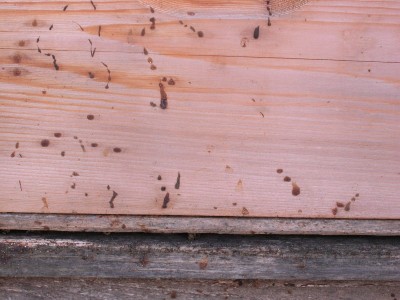
Dysentery presents in a number of adult bee diseases. Investigate the cause before deciding on a plan of action.
Sugar feeding and dysentery
Dysentery can occur if bees feed on unsuitable sugar sources, such as honey or sugar with excessively high moisture contents. When this occurs, bees are unable to retain the large accumulation of water in their gut, resulting in dysentery. Fermented or coarsely granulated stores can stimulate dysentery, as does acid-inverted sucrose (sucrose inverted using enzymes does not). Although acid-inverted sucrose is sometimes thought to be suitable for bees because of its similarity to honey, it contains toxins that worsen water accumulation in the gut. Sugar syrup made with refined sucrose is a better alternative; it does not need to be inverted.
To help reduce the risk of dysentery caused by unsuitable feeding:
- Observe good husbandry and apiary management practices; they are vital in maintaining vigorous, healthy stocks that are better able to withstand infections.
- Avoid feeding bees with fermented honey or sugars.
- Use only refined sucrose, white sugar or ready-made syrup mixtures (such as Ambrosia or equivalent). Do not use brown sugar.
- Complete autumn/syrup feeding before the onset of the cold weather to allow time for the colony to take down the sugar syrup, allowing them to reduce its water content to a safe level before the onset of winter.
See our ‘Best practice guidance note Number 7: feeding bees – sugar’ for more information.