
During the swarm season, usually between April and late July in the UK, honey bees can swarm from their original colony in great numbers. Before finding a new permanent home, they may gather in a large cluster, containing thousands of bees, in a garden or any other outdoor surface. This can cause a nuisance, especially if the bees have settled in a location where members of the public may come within close proximity to it.
If the swarm of bees is out of the way and not likely to cause stings, it can be ignored and the bees should move on in a day or so. However, if a swarm constitutes a nuisance, individuals are urged to contact a local swarm collector and ask if they are prepared to come and collect the swarm. The British Beekeepers Association (BBKA) hold a list of swarm collectors, you can find their details on the BBKA website: www.bbka.org.uk/find-a-local-swarm-collector.
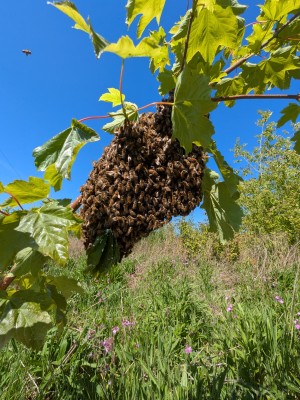
A swarm of honey bees
Feral honey bee colonies
When a swarm departs a managed colony, its natural urge is to seek out and set up a new home. At this point, the escaped colony is referred to as a feral colony. Feral honey bees can establish new colonies in the crevices of trees or in buildings, often within chimneys and sometimes within the walls of buildings. This can cause a nuisance to home owners and potential damage to buildings.
When considering destruction of a feral honey bee colony, a careful assessment should be made about whether people have been stung by bees from the colony and whether people are at risk because of its location. If the colony is not causing any risk to public health, then alternative measures should be carefully considered before carrying out a destruction.
Wild bees
Sometimes wild bees, such as bumble bees or solitary bees, nest in cavities in buildings. They will not cause any damage to the building, the populations tend to be quite small and they are usually docile. We recommend that they are left alone. Wild bee colonies have much smaller colonies than honey bees and their nesting activities cease in the autumn.
Destruction or removal of honey bee colonies
We cannot recommend specific products for the destruction of honey bee colonies, however, there are some biocides available. Only insecticides that are approved by the HSE can be used. Ensure that the product can be used on honey bees; this information can usually be found on the back of the label. For individuals considering honey bee nest destruction, please read the Pest Management Alliance best practice guide for honey bee control and the guidance on honey bee destruction from HSE. To find a professional pest controller, please visit the British Pest Control Association website.
Alternatively, live feral colonies can be physically extracted from buildings without the use of pesticides by professional bee removers. The colony can then be relocated without harming the bees. The bee remover will also be able to provide advice on how to prevent future honey bee swarms from nesting in the building. The UK Bee Removal (UKBR) network supports professionals who provide this honey bee removal service to members of the public seeking assistance with established feral colonies and provides a means of contact with registered bee removers for members of the public. Bee Removers should be registered with National Bee Unit and inform the NBU if any foulbrood is suspected.
The BBKA has some useful guidance on the removal of honey bee colonies from buildings.