Training offered by the NBU
A principal element of the work of the National Bee Unit and Bee Inspectors is the provision of assistance to beekeepers on a wide range of bee health and husbandry issues.
This ranges from beekeeping advice given to individual beekeepers during apiary inspections through to large-scale organised lectures, apiary training sessions, practical diseases workshops and training seminars. These are organised across England and Wales by NBU Inspectors. In many areas beekeeping associations play an active and key role in arranging these sessions.
NBU field-based Bee Inspectors can assist beekeepers by providing a range of training including:
- Training on foulbrood recognition and control; American foulbrood (AFB) and European foulbrood (EFB), recognition of other brood disorders and conditions, managing Varroa, Integrated Pest Management (IPM) and recognition of non-native invasive species Aethina tumida (small hive beetle), Tropilaelaps mites and yellow-legged hornet.
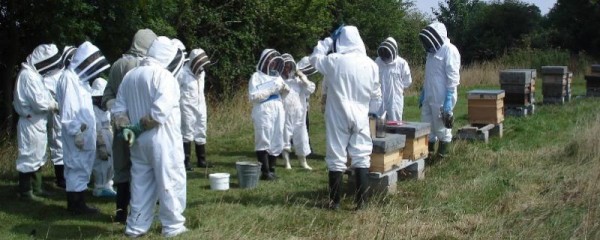
- Practical apiary safaris; voluntary apiary inspection tours, organized by local Beekeeping Associations covering their members' bees.
Please note that training and talks delivered by the NBU will have a bee health or biosecurity focus.
Requests for training and talks
Regional Bee Inspectors will offer Bee Health Day events covering a range of topics delivered at county level and may be able to speak at regional conventions, subject to other commitments. Bee Health Days will usually be conducted during the working week and not at weekends. Upcoming Bee Health Days will be advertised through your local beekeeping association.
Regional Bee Inspectors are not normally able to offer smaller branch level talks but may be able to provide talks at national events, field duties permitting. Seasonal Bee Inspectors will be able to offer Bee Safaris and branch/division talks during the inspection season, subject to existing commitments and inspection priorities. All requests for talks should go through your local Regional Bee Inspector. Contact details for all Regional Bee Inspectors can be found on the Contacts page.
Practical comb training
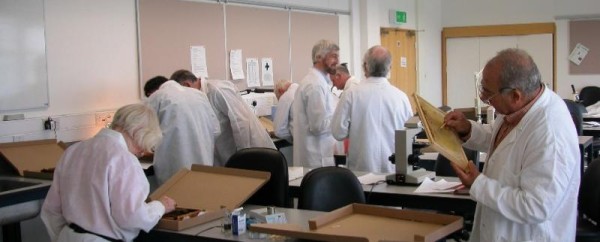
Individuals looking to acquire honey bee comb samples infected with statutory diseases for bee health practical training sessions must apply for a licence to handle them. A comb licence can be applied for through our application form.
Please note that applicants will be asked to outline their experience with handling comb and outline their biosecurity arrangements for the proposed event. Applicants should have an up-to-date BeeBase record. If applicants have not previously held a licence, they may be asked to demonstrate their biosecurity arrangements. We are open for applications from 1st December to 1st March for the following season.
Consultancy
The National Bee Unit also provides beekeeping consultancy services and training for government and industry overseas. NBU staff have recent experience of working in Europe, Asia, America and Africa. Contact the NBU for more details.
NBU training material
The NBU has an extensive catalogue of training materials for beekeepers, including fact sheets, best-practice guides, videos, and lectures. These can be viewed on our leaflets, guides and videos page.
NBU staff write articles for BeeCraft, BBKA News, Welsh Beekeepers’ Association news and the Bee Farmers Association publication ‘Bee Farmer’. Free copies of articles written by NBU staff can be viewed on our NBU articles page.